
How Loose Dentures Affect Chewing and Nutrition

Reviewed by Dr. Reza A. Tafreshi, DDSCA Dental License #101339
Practising dentist in Aliso Viejo, CA. DDS, Loma Linda University.
Medically reviewed · 3 minute read
Replacing missing teeth is usually discussed as a matter of comfort or appearance. The effect that is easiest to measure, though, is mechanical: how hard you can bite. That turns out to matter, because chewing ability influences what people choose to eat, and food choices accumulate.
Chewing force drops substantially
Natural teeth transmit bite force through the periodontal ligament into bone. A conventional denture rests on gum tissue instead, and tissue does not tolerate the same loads — the limit is discomfort, not the denture. Published measurements of maximum bite force vary widely with technique and tooth position, but the direction is consistent across studies: complete-denture wearers generate a fraction of the force recorded in people with natural dentitions, and implant-retained prostheses fall between the two.
That difference is not academic. It is the reason a steak, a raw carrot or a crusty roll stops being worth the effort.
Diets change without a decision being made
Few people decide to eat differently because of a denture. They simply stop ordering the things that are difficult, and the substitutions tend to run the same way: away from raw vegetables, nuts, seeds and lean meats, and toward softer foods that are often more processed and higher in refined carbohydrate.
Because no single meal represents a change, the shift is easy to miss — including by the person making it. It usually becomes visible only when someone is asked to list what they have actually eaten in a week.
What the research found
Sheiham and Steele, writing in *Public Health Nutrition*, examined whether the condition of the mouth and teeth affects what older people can eat and their nutritional status. They reported that people with impaired dentition — including denture wearers — had lower intakes of several nutrients concentrated in foods that are hard to chew, among them fruit and vegetable sources of vitamin C, carotene, and non-starch polysaccharides (fibre), with corresponding differences in blood measurements.
The finding is about food selection rather than digestion: when chewing is difficult, the foods that get dropped are disproportionately the nutrient-dense ones.
What stabilisation changes, and what it does not
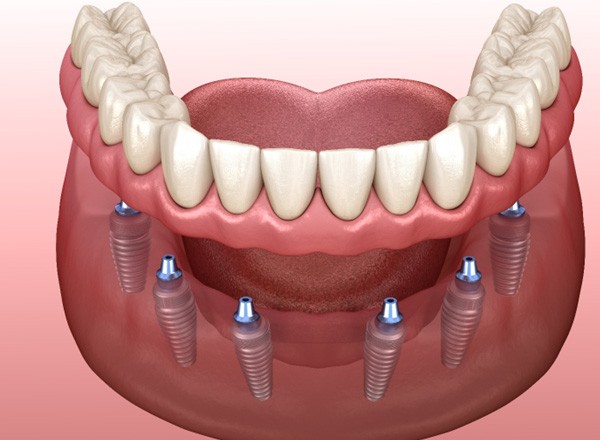
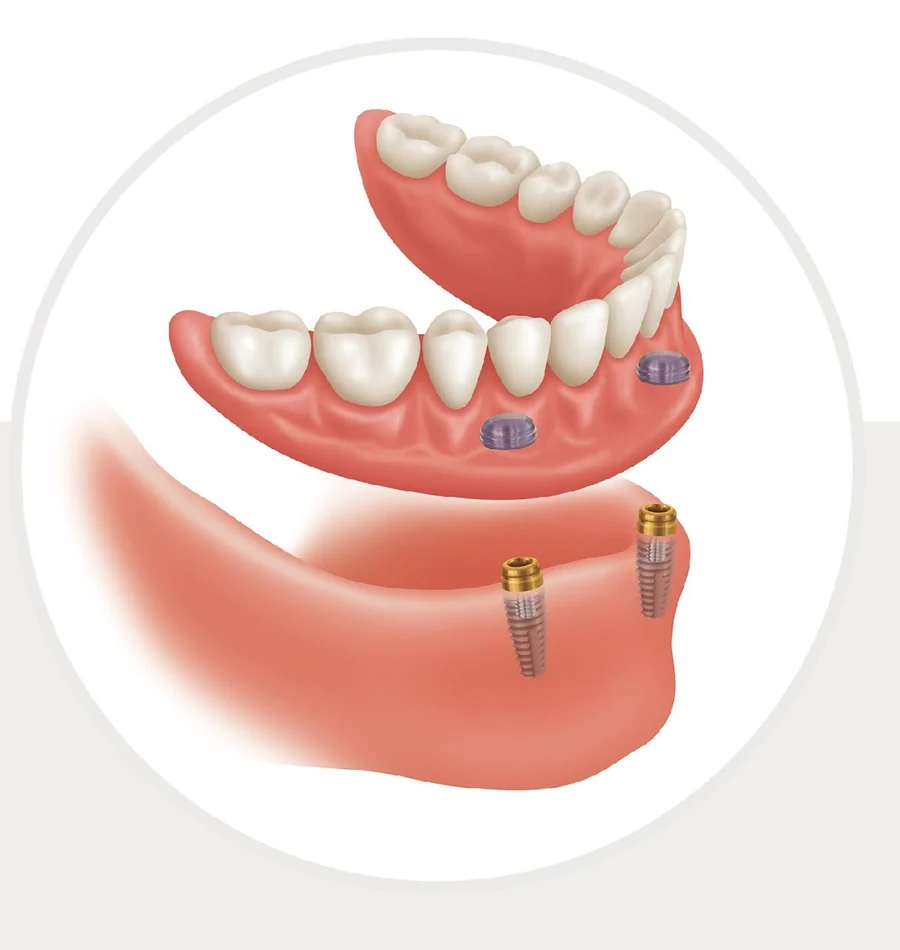
Restoring retention — with a snap-in overdenture or a fixed full-arch option — restores a meaningful part of chewing function, and removes the reason for avoiding whole categories of food. It does not automatically change what someone eats. Habits formed over several years of avoiding certain textures tend to persist after the mechanical obstacle is gone, which is worth knowing in advance: the food is available again, but choosing it is a separate step.
This is also why nutrition is worth raising at a denture consultation rather than after it. If the goal is being able to eat normally, that is a different conversation from the goal of a denture that stays put.
References
Take the next step
If you are avoiding foods because chewing them is difficult, say so at your next appointment — it changes what we recommend. Compare the denture options, or call our Aliso Viejo office.
More from the Blog
 How Long Do Dental Implants Last?
 Am I Too Old for Dental Implants?
 Why Dentures Loosen Over Time — and What Actually Fixes ItUpgrading a Removable Overdenture to a Fixed Implant Denture
Have a question about your smile?
Bring this guide to a consultation in Aliso Viejo.
Book Your Visit Today
Same-day appointments available, and we are in-network with most major PPO plans. Call our Aliso Viejo team or book online.
Online booking opens in Zocdoc.
4.7 Rating from 275 Google ReviewsPatient education
Keep your smile moving forward
Read practical treatment guides and oral-health answers from the Aliso Viejo Family Dental Group team.

Zirconia Crowns: The Advantages, and the Trade-Offs
Is zirconia better than porcelain? How long do zirconia crowns last? A complete look at the strongest dental crown material available today.
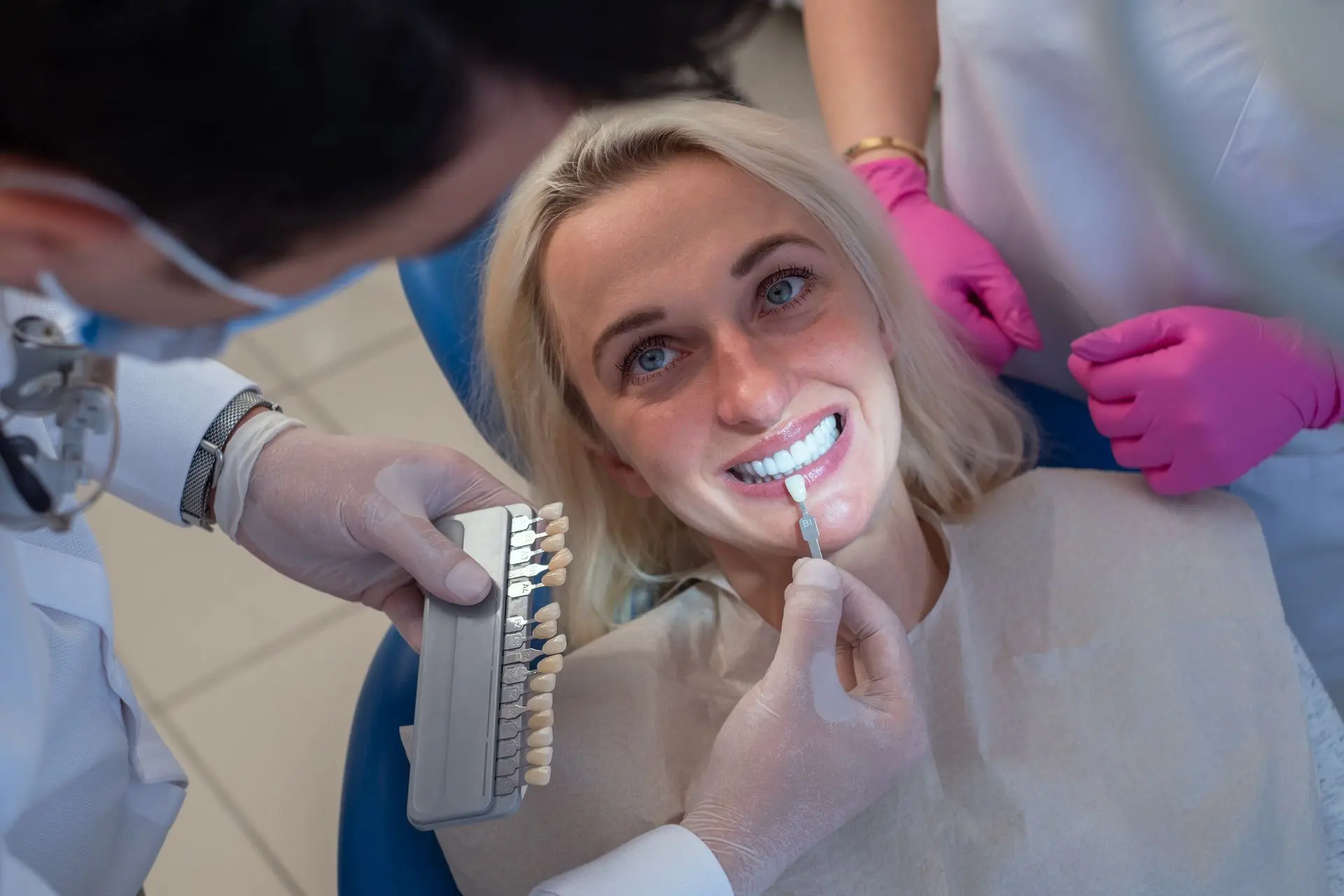
Dental Veneers: Pros and Cons of Porcelain and Composite Veneers
Comparing porcelain, composite, and Lumineer veneers — advantages, disadvantages, candidacy, and cost considerations.
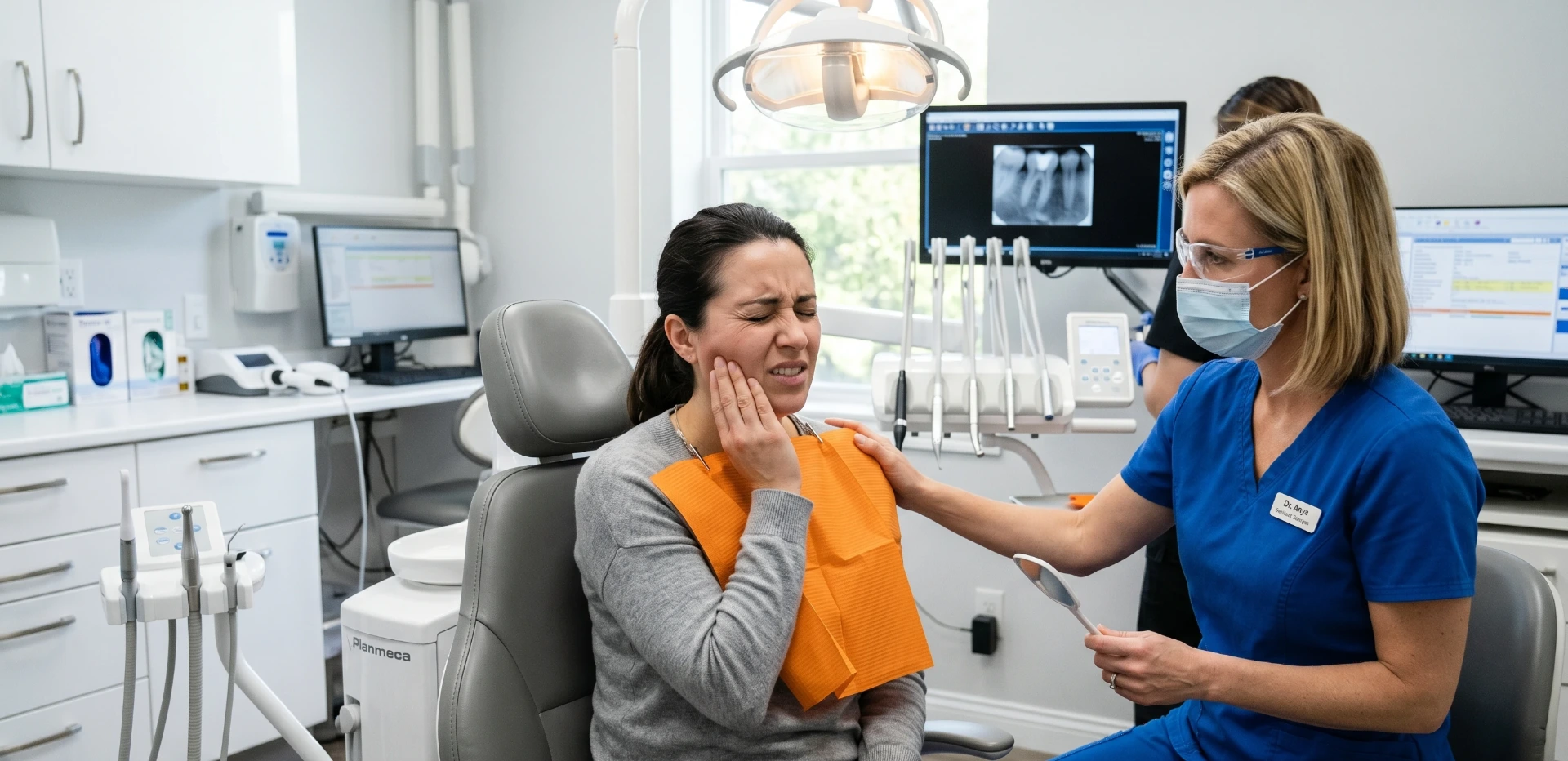
Wisdom Tooth Removal: When Is Wisdom Tooth Extraction Necessary?
Not every wisdom tooth needs to come out. Here is how dentists decide which third molars to remove and which to leave alone.