
Why Dentures Loosen Over Time — and What Actually Fixes It

Reviewed by Dr. Reza A. Tafreshi, DDSCA Dental License #101339
Practising dentist in Aliso Viejo, CA. DDS, Loma Linda University.
Medically reviewed · 5 minute read
If your dentures fitted well three years ago and now shift when you bite into a sandwich, nothing has gone wrong with the denture. The denture is the same shape it has always been. What changed is the foundation underneath it — and that distinction explains why some fixes hold and others keep failing.
The ridge does not stop changing
When teeth are removed, the ridge of bone that held them loses the loading that kept it dense, and the body begins resorbing it. Tallgren's 25-year longitudinal study of denture wearers documented that this shrinkage never fully stops: it is fastest in the first year after extractions and then continues gradually, year after year, with the lower jaw typically losing height considerably faster than the upper.
A conventional denture rests directly on that ridge. As the ridge flattens, a denture moulded to yesterday's gums rocks on today's. Movement then concentrates pressure unevenly, which can contribute to further change — less ridge, less grip, more movement.
What adhesives and relines can and cannot do
Adhesive creams create a temporary seal between acrylic and gum. They can make a reasonably fitting denture feel more secure for a few hours. They cannot compensate for a foundation that keeps changing, which is why patients often find themselves using more cream, more often, for less effect.
A reline — resurfacing the inside of the denture to match your current ridge — is a legitimate maintenance procedure, and there are times it is exactly the right call: the denture is otherwise sound, the bite is correct, and the fit has drifted moderately. But a reline updates the denture to today's ridge. It does not slow tomorrow's resorption. Most full-denture wearers need relines repeatedly over the years, each one starting the same clock again.
The practical question is not whether a reline works — it does — but whether you are relining a denture every eighteen months on a foundation that is still receding. That is the point at which it is worth comparing the alternatives rather than repeating the maintenance.
Anchoring to bone addresses the cause
The approach that addresses the underlying problem is giving the denture something other than a receding ridge to hold onto:
| Option | How it is retained | Still removable? | Worth knowing |
|---|---|---|---|
| Reline | Nothing changes; the fit is resurfaced | Yes | Buys time; does not affect resorption |
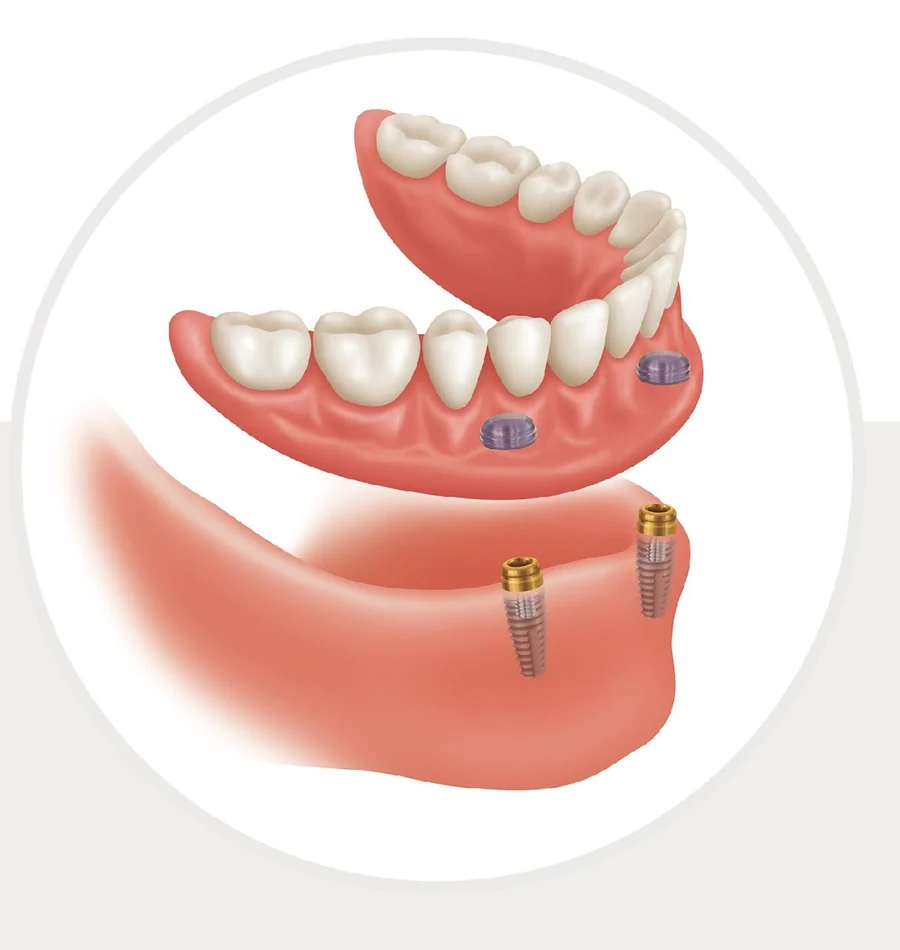
| Snap-in overdenture (2-4 implants) | Attachments on implants | Yes, nightly | Retention inserts wear and are replaced periodically |
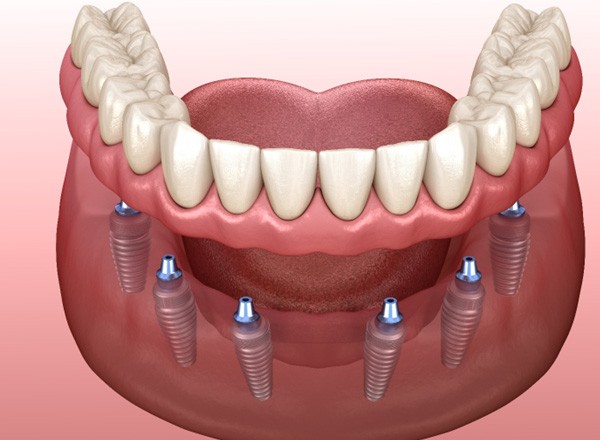
| Fixed full-arch | Screwed or attached to four or more implants | No — removed only in the office | Requires adequate bone and a surgical phase |
Snap-in overdentures. Attachments on two to four implants let the denture click into place, so retention comes from the implants rather than from suction against tissue. It is still removed for cleaning. The McGill consensus statement, an international panel of prosthodontic opinion, identified the two-implant lower overdenture as the first-choice standard of care for patients with no lower teeth — notable because it is also typically the lowest-cost implant option.
Fixed full-arch options. For patients who do not want a prosthesis that comes out, four or more implants can support a set that is removed only in the office — including LOCATOR FIXED™ and screw-retained designs such as All-on-4. Both require adequate bone and involve surgery, and neither is appropriate for every patient.
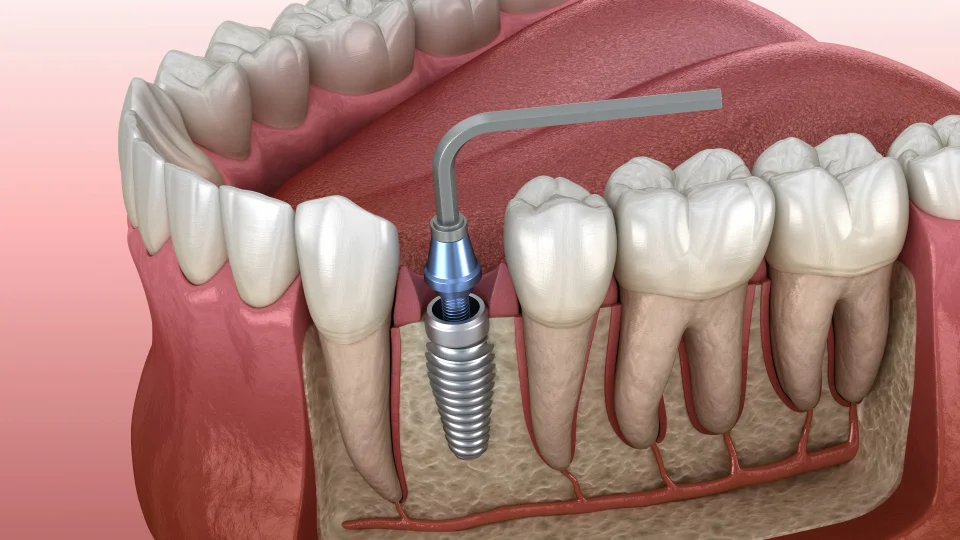
Beyond retention, implants change the loading: they transmit chewing forces into the bone rather than onto the gum surface. A conventional denture does not do that regardless of how well it fits.
The cost is not only comfort
A loose denture reshapes daily life quietly. Patients drop nuts, raw vegetables and firm proteins from their diets — the foods that matter most in later years. Many stop ordering what they actually want, or decline invitations where eating in front of others feels risky. Speech changes when a lower plate shifts mid-sentence. None of this appears on a radiograph, and it is often the real reason someone finally asks about alternatives. We cover that in more detail in how loose dentures affect chewing and nutrition.
Where to start
The right answer depends on how much your ridge has changed, the condition of your current denture and what you want from it. A 3D scan shows how much bone remains and which retention options it can support. That assessment comes before any recommendation — a well-timed reline and a two-implant overdenture are both correct answers to different findings. Compare the denture options.
References
Take the next step
If your denture rocks, needs more adhesive than it used to, or you are relining it repeatedly, call our Aliso Viejo office. Bring the denture and any implant records you have.
More from the Blog
 How Long Do Dental Implants Last?
 Am I Too Old for Dental Implants?
 How Loose Dentures Affect Chewing and NutritionUpgrading a Removable Overdenture to a Fixed Implant Denture
Have a question about your smile?
Bring this guide to a consultation in Aliso Viejo.

Book Your Visit Today
Same-day appointments available, and we are in-network with most major PPO plans. Call our Aliso Viejo team or book online.
Online booking opens in Zocdoc.
4.7 Rating from 275 Google ReviewsPatient education
Keep your smile moving forward
Read practical treatment guides and oral-health answers from the Aliso Viejo Family Dental Group team.

Zirconia Crowns: The Advantages, and the Trade-Offs
Is zirconia better than porcelain? How long do zirconia crowns last? A complete look at the strongest dental crown material available today.
Dental Veneers: Pros and Cons of Porcelain and Composite Veneers
Comparing porcelain, composite, and Lumineer veneers — advantages, disadvantages, candidacy, and cost considerations.
Wisdom Tooth Removal: When Is Wisdom Tooth Extraction Necessary?
Not every wisdom tooth needs to come out. Here is how dentists decide which third molars to remove and which to leave alone.