
Composite Veneers vs Porcelain Veneers: Cost, Durability & Which Is Right

Medically Reviewed by Dr. Reza A. Tafreshi, DDSClinical Board Verified
Fact-checked and approved for clinical accuracy in Orange County, CA.

Medically reviewed · 6 minute read
Veneers are thin facings bonded to the front of teeth to improve their color, shape, or alignment. The two main types—composite resin and porcelain—can both produce beautiful results, but they get there differently. Composite is sculpted directly onto the tooth by the dentist; porcelain is fabricated in a dental lab and then bonded in place. Understanding how the two compare on cost, durability, and maintenance makes the choice much clearer.
What are composite veneers?
Composite veneers are built from the same tooth-colored resin used for modern fillings, applied in layers and shaped by hand directly on the tooth. Because no laboratory fabrication is required, treatment is often completed in a single visit, usually with little or no removal of natural enamel. Composite is also the material behind "partial veneers"—conservative additions that repair a chipped corner, close a small gap, or mask one discolored area without covering the entire tooth surface. The trade-offs: composite is more porous than porcelain, so it stains and dulls over time, and its final appearance depends heavily on the artistic skill of the dentist placing it.
What are porcelain veneers?
Porcelain veneers are thin ceramic shells custom-fabricated for each tooth and bonded permanently to the prepared surface. Modern ceramics such as lithium disilicate (E.Max) combine high strength with the translucency of natural enamel, which is why porcelain remains the standard for full smile makeovers. Treatment traditionally takes at least two visits: teeth are prepared and scanned or impressed at the first, and the finished veneers are bonded at the second. Porcelain resists staining far better than composite and holds its polish and color for many years.
Side-by-side comparison
| Factor | Composite veneers | Porcelain veneers |
|---|---|---|
| Material | Layered tooth-colored resin, sculpted by hand | Custom ceramic (often E.Max lithium disilicate) made in a lab |
| Relative cost | Lower per tooth—no laboratory fabrication | Higher per tooth, reflecting lab work and materials |
| Typical lifespan | Often around 5–7 years with good care | Often 10–15 years or more with good care |
| Procedure time | Frequently a single visit | Usually two or more visits |
| Stain resistance | Can stain and lose luster over time | Highly stain-resistant; keeps its polish |
| Repairability | Easily repaired or added to in the chair | Chips usually require remaking the veneer |
| Tooth preparation | Minimal to none | Conservative enamel reduction is usually needed |
Cost: why the gap exists
Composite veneers generally cost meaningfully less per tooth than porcelain because the dentist completes the work chairside in one appointment, with no laboratory fees or ceramic materials involved. Porcelain's higher fee reflects custom fabrication, premium ceramics, and additional appointments. It is worth comparing lifetime cost, not just the initial fee: composite typically needs polishing, repair, or replacement sooner, so a lower entry price can narrow over a decade of maintenance. Exact fees depend on how many teeth are treated and the complexity of each case, which is why a consultation and written estimate come before any numbers are final.
Durability and everyday life
Porcelain is the more durable material by a clear margin—harder, more color-stable, and less prone to edge wear. Composite is softer and can chip at the biting edge or pick up stain from coffee, tea, and red wine, though small defects can usually be repaired in minutes without replacing the whole veneer. With either material, habits matter: nail biting, ice chewing, and untreated nighttime grinding shorten the life of any veneer, and a night guard is often recommended for patients who clench.
What are partial veneers?
Not every smile needs full coverage. A partial veneer restores only the damaged or discolored portion of a tooth—a chipped incisal corner, a worn edge, or a single stained patch—while leaving the rest of the natural surface untouched. Composite is the usual material because it can be blended seamlessly into surrounding enamel in one visit, though lab-made porcelain partials are possible for select cases. For patients with one or two localized flaws, a partial veneer often delivers the visual result they want at a fraction of the cost and tooth preparation of a full set, and it keeps every future option open.
What to expect at each appointment
A composite veneer visit is straightforward: the tooth surface is cleaned and lightly conditioned, resin is layered and sculpted to the planned shape, then hardened with a curing light and polished—typically under an hour per tooth, with no temporaries and no second visit. Porcelain follows a two-stage rhythm: at the first appointment the teeth are conservatively prepared, a digital scan is captured, and provisional veneers protect the teeth while the ceramics are fabricated; at the second, each veneer is tried in, checked for shade and fit, and bonded permanently. Either way, treatment starts with a consultation, photographs, and a smile-design conversation—never with a drill.
Who suits each option?
Composite tends to suit patients who want a same-day improvement, are correcting a small number of teeth or minor flaws, prefer a lower upfront investment, or are younger patients for whom a reversible, add-on approach preserves options. Porcelain tends to suit patients planning a complete smile makeover, those who want maximum stain resistance and the most natural light-handling, coffee and wine drinkers, and anyone who wants the longest-lasting result and is comfortable with a modest enamel preparation. Neither choice is right for everyone—gum health, bite forces, and existing restorations all factor into the recommendation.
The in-house lab and E.Max advantage
One practical difference between offices is where the porcelain work happens. AVF Dental Group operates an in-house dental lab, which means our porcelain veneers are designed and fabricated steps away from the treatment chair rather than shipped to a third-party facility. That shortens turnaround, allows the dentist and technician to fine-tune shade and shape together—sometimes with the patient present—and keeps quality control under one roof. We work extensively with E.Max lithium disilicate, a ceramic chosen for its combination of strength and lifelike translucency in the smile zone.
References
Take the next step
The best way to choose between composite and porcelain is to see both options mapped onto your own smile. Schedule a cosmetic consultation at AVF Dental Group in Aliso Viejo to review photos, discuss goals and budget, and get a written plan for the approach that fits you.
More from the Blog
Zirconia Crown: Advantages and Disadvantages of Zirconia Crown
Dental Veneers: Pros and Cons of Porcelain and Composite Veneers
What to Expect with Cosmetic Dentistry
What to Expect with Dental BridgesHave a question about your smile?
Bring this guide to a consultation in Aliso Viejo.
Book Your Visit Today
Same-day appointments and free consultations available. Our team is ready to help.
Patient education
Keep your smile moving forward
Read practical treatment guides and oral-health answers from the AVF Dental Group team.

Zirconia Crown: Advantages and Disadvantages of Zirconia Crown
Is zirconia better than porcelain? How long do zirconia crowns last? A complete look at the strongest dental crown material available today.
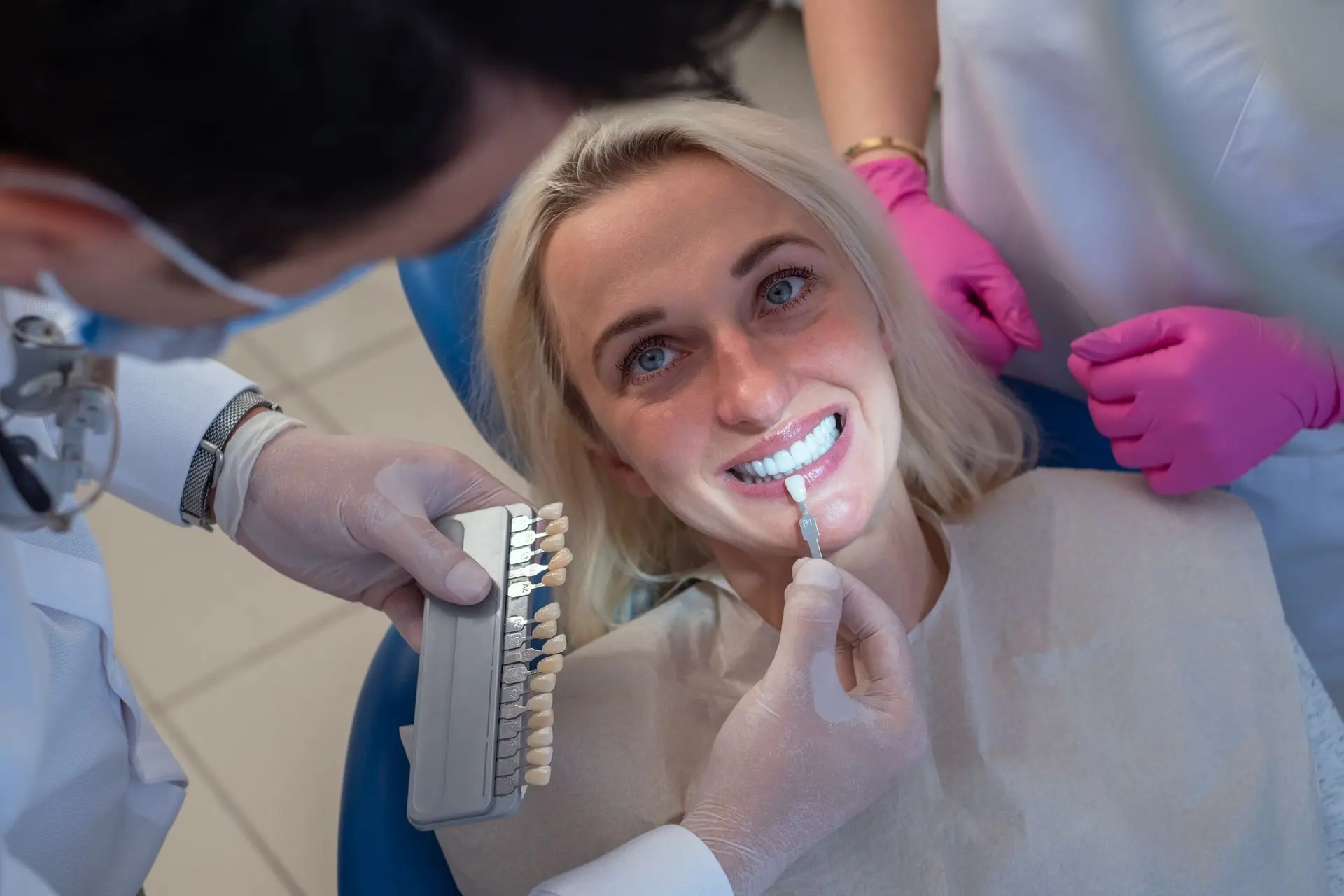
Dental Veneers: Pros and Cons of Porcelain and Composite Veneers
Comparing porcelain, composite, and Lumineer veneers — advantages, disadvantages, candidacy, and cost considerations.
Wisdom Tooth Removal: When Is Wisdom Tooth Extraction Necessary?
Not every wisdom tooth needs to come out. Here is how dentists decide which third molars to remove and which to leave alone.
