
Frequently Asked Questions
Browse answers about appointments, treatments, insurance, financing, and our technology.
Showing 55 of 55 questions
Yes — we welcome new patients of all ages. You can book an appointment online via Zocdoc or call our office directly at (949) 360-9700.
We are open Monday through Thursday from 8:00 AM to 5:00 PM, and on Fridays from 8:00 AM to 2:00 PM.
Yes — we reserve same-day slots every weekday for emergency visits, toothaches, or urgent care needs.
Our clinic is located at 15 Mareblu Suite #360, Aliso Viejo, CA 92656. We have ample parking and easy freeway access for patients coming from Laguna Hills, Laguna Niguel, and Mission Viejo.
Dr. Reza A. Tafreshi, DDS, is the founder. He is a Loma Linda University School of Dentistry graduate who has served Orange County families for over 15 years.
Yes — we welcome family patients of all ages and focus on creating a calm, positive experience for young patients.
Yes. Nitrous oxide (laughing gas) and oral sedation are available to help anxious patients feel relaxed and comfortable.
Please bring a photo ID, your insurance card if applicable, a list of current medications, and any dental records or X-rays from a previous office that you would like us to review.
You can request a new appointment through our online booking partner or call (949) 360-9700. Existing Zocdoc appointments can be managed through Zocdoc; our team can also help by phone.
Call us as soon as possible for guidance and same-day availability when offered. Severe swelling, trouble breathing or swallowing, uncontrolled bleeding, or a serious facial injury may require emergency medical care.
We accept most major PPO plans, including Delta Dental, Cigna, Guardian, MetLife, and Denti-Cal (Medi-Cal Dental). Contact us to verify your specific benefits.
We are primarily a PPO and Denti-Cal based practice. Contact our billing staff to verify whether your specific HMO plan includes out-of-network benefits we can process.
We offer flexible in-house financing and third-party options such as CareCredit, Cherry, and Onederful Finance. We also offer an in-office wellness plan for uninsured patients.
Many insurance plans cover a portion of implant placement or the final crown. We will compile and submit pre-authorizations to maximize your insurance benefits.
Yes. After an examination and any needed diagnostic imaging, we explain the recommended options, estimated fees, insurance considerations, and available payment options before treatment begins.
With our in-office Glidewell CAD/CAM digital milling lab, we scan, design, and mill your custom crown in a single visit—no temporary crowns or multi-week waits required.
Yes. Each crown, veneer, and bridge is custom-designed around your unique facial symmetry, tooth dimensions, and natural shade match.
With proper hygiene, home care, and regular dental cleanings, high-quality porcelain veneers typically last 10–15 years or longer.
Most adults with good general health and sufficient jawbone density are excellent candidates. We use low-dose 3D scans during consultation to confirm bone volume.
A Snap-On Overdenture (Locator Fixed Denture) is a cost-effective option that locks securely onto 2 to 4 implants, eliminating slipping and bulky acrylic palates without messy adhesives.
A professional exam and cleaning are recommended every six months. Patients with active gum disease may need maintenance visits every three to four months.
Yes. We do not use silver amalgam fillings. We use modern, tooth-colored composite resins that bind directly to your tooth structure.
Yes. Tell our team about your concerns when scheduling so we can plan a calmer visit. We explain each step, answer questions, and can discuss comfort and sedation options when clinically appropriate.
Yes. Ask your previous dental office to send your records and X-rays to AVF Dental Group, or call our team for instructions before your visit. We will review available records as part of treatment planning.
Our Carestream 3D Cone Beam CT scan provides highly accurate 3D views of bones, nerves, and sinuses. This allows Dr. Tafreshi to plan dental implants and oral surgeries with extreme precision.
Candidates are evaluated individually based on bone, gum health, remaining teeth, medical history, and restorative goals.
The full process commonly spans several months because the implants need time to integrate before the final teeth are delivered.
The goal is to restore confident function, but your team will provide a staged diet and care instructions during healing.
Six implants may provide a broader support pattern for selected patients, but the best number depends on anatomy, bite, and restoration design.
The implants are intended as a long-term foundation. The prosthetic teeth require professional maintenance and may eventually need repair or replacement.
Not always. Imaging tells us whether existing bone is sufficient and whether grafting or another approach is advisable.
Many implant-supported dentures are designed to be removed for cleaning, while some full-arch options are fixed. We explain the difference during planning.
The number depends on the arch, bone, attachment design, and the stability required.
Sometimes. We evaluate its fit, tooth position, strength, and whether a new prosthesis would provide a better result.
It depends on the spaces, bone, bite, hygiene access, and restorative goals. We compare both options during your consultation.
Often, yes, but timing depends on infection, bone quality, extractions, and the planned restoration.
Healing varies by case. Your written plan will include expected milestones and temporary-care instructions.
No. We determine this from the tooth, gum health, bite, material requirements, and complexity of the case.
A properly selected and fitted crown can provide long-term service with good hygiene, regular exams, and protection from grinding.
We match shade, anatomy, and bite to create a restoration that fits the surrounding smile.
Timing depends on the amount and type of movement. Your digital plan provides a personalized estimate.
Aligners are generally removed for meals and replaced after brushing or rinsing.
They work well for many cases, but some movements require other orthodontic or restorative approaches.
Whitening lightens natural teeth but does not change the shade of existing restorations, which is why treatment sequencing matters.
Temporary sensitivity can occur. We tailor the treatment and provide strategies to reduce discomfort.
Longevity depends on diet, hygiene, tobacco exposure, and periodic touch-up care.
Many patients benefit from six-month visits, while active gum disease or higher cavity risk may call for a shorter interval.
It is a periodontal treatment that cleans below the gum line and smooths root surfaces when disease has created deeper pockets.
No. Imaging is recommended according to your risk, symptoms, history, and clinical findings.
Early inflammation can often improve with professional care and consistent home hygiene. Bone loss and advanced disease require individualized management.
We use local anesthesia and comfort measures to keep treatment manageable, followed by clear aftercare instructions.
The interval depends on gum-pocket depth, bleeding, bone history, and how your tissues respond to treatment.
The tooth is anesthetized during treatment. Most patients experience relief once the infected tissue is treated, with manageable soreness afterward.
Back teeth often benefit from a crown because they absorb heavy chewing forces. The restoration depends on remaining tooth structure and location.
Prompt evaluation is important, especially with swelling, fever, or worsening pain.
Book Your Visit Today
Same-day appointments and free consultations available. Our team is ready to help.
Patient education
Keep your smile moving forward
Read practical treatment guides and oral-health answers from the AVF Dental Group team.

Cosmetic Dentistry•
Zirconia Crown: Advantages and Disadvantages of Zirconia Crown
Is zirconia better than porcelain? How long do zirconia crowns last? A complete look at the strongest dental crown material available today.
Veneers•
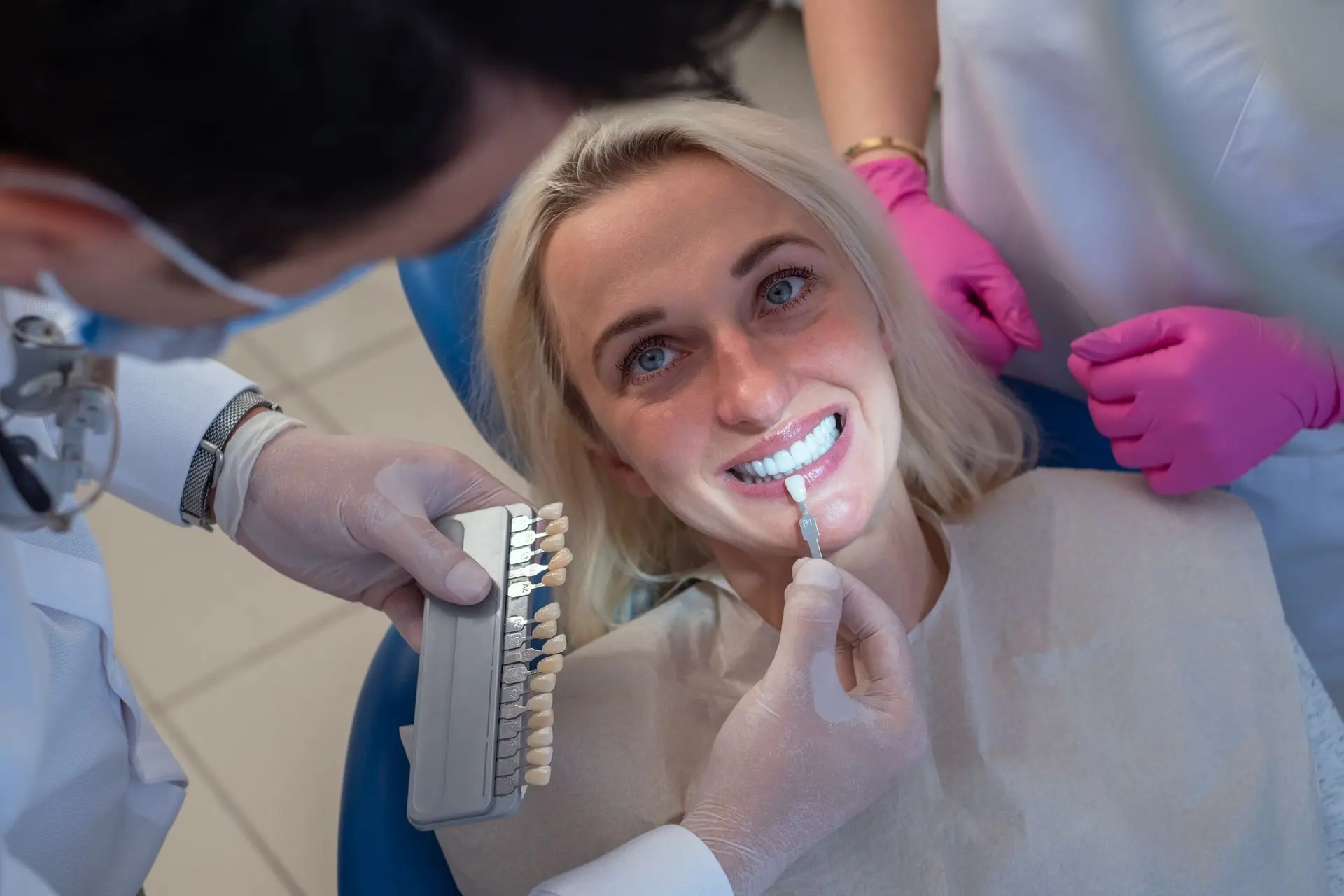
Dental Veneers: Pros and Cons of Porcelain and Composite Veneers
Comparing porcelain, composite, and Lumineer veneers — advantages, disadvantages, candidacy, and cost considerations.
Oral Surgery•
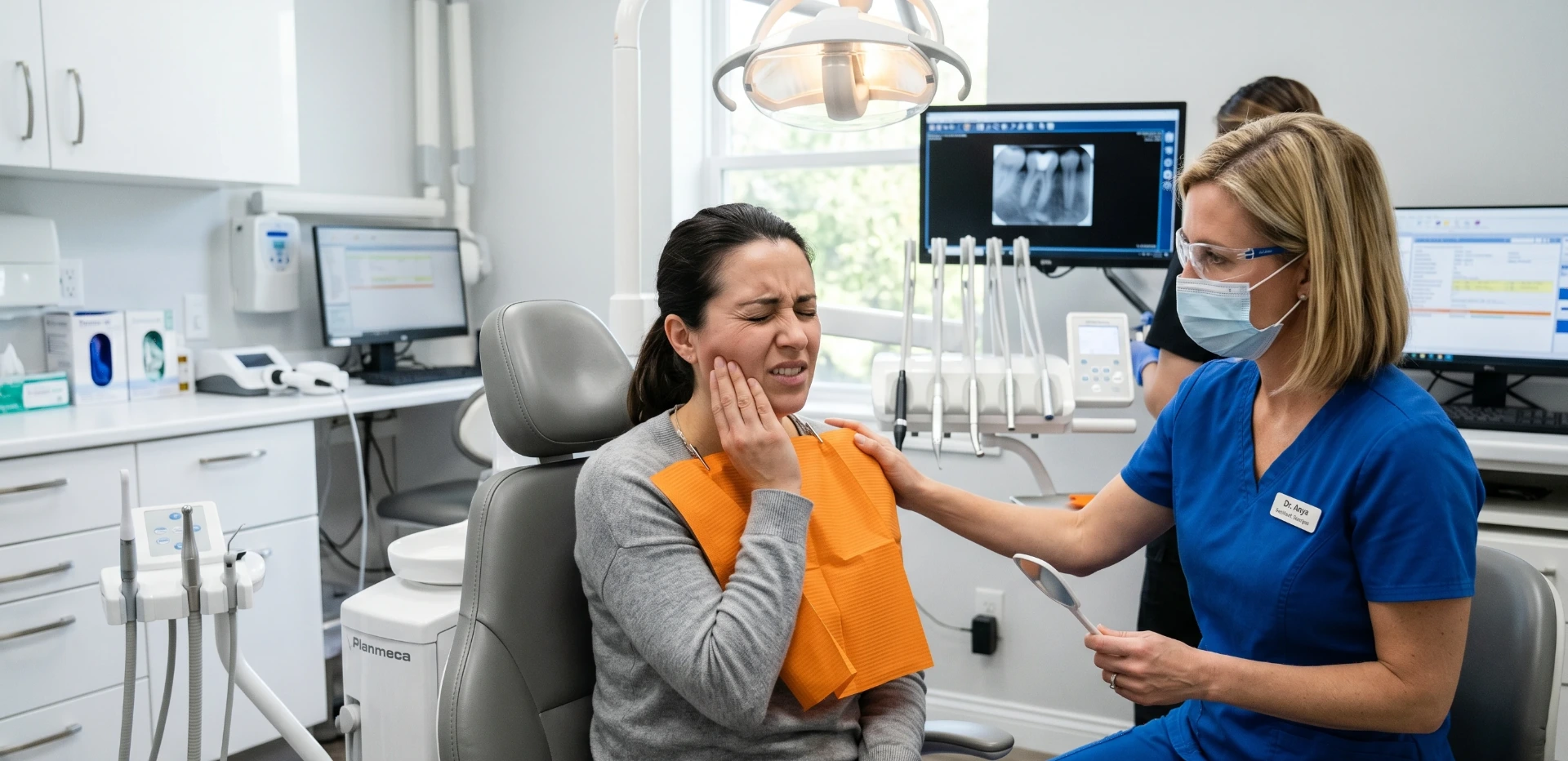
Wisdom Tooth Removal: When Is Wisdom Tooth Extraction Necessary?
Not every wisdom tooth needs to come out. Here is how dentists decide which third molars to remove and which to leave alone.
