Full-Arch Implant Restoration
All-on-4 Dental Implants in Aliso Viejo, CA
If most of your teeth in one jaw are missing, loose or failing, four implants can hold a fixed bridge for that whole arch. It stays in, and you clean it much like natural teeth.

All-on-4® Monolithic Architecture
45° AngulationHow much does All-on-4 cost in Aliso Viejo?
All-on-4 at our office is $19,500 – $25,000 per arch. That covers four implants, the same-day provisional teeth and the final zirconia arch. Your exact fee is set after an exam. Many PPO plans pay part of it: see how to use your benefits and all implant fees.
What is All-on-4 Dental Implant Treatment?
All-on-4 is an advanced full-arch restorative protocol that replaces an entire upper or lower row of teeth using just four titanium implants. By angling the two posterior implants up to 45 degrees, we anchor into the densest natural jawbone, eliminating the need for sinus lifts or bone grafts in most patients and allowing for same-day fixed provisional teeth.
Full Arch Stability · In-House Roland CAD/CAM Lab · Zero Adhesives
Why Choose All-on-4 Over Traditional Dentures?
Traditional dentures rest directly on delicate gum tissue, causing gradual jawbone resorption, painful slippage, speech impediments, and a severely restricted diet. All-on-4 implants stimulate the alveolar bone just like natural tooth roots, stopping bone loss and anchoring a rock-solid, permanent bridge that feels and functions like natural teeth.
Comparing Full-Arch Replacement Options
See how All-on-4 fixed hybrid bridges compare against removable snap-in overdentures and standard acrylic dentures:
Permanently Fixed
- Traditional Dentures
- No (Removable)
- Snap-On Overdentures
- No (Removable)
- All-on-4 Fixed Bridge
- Yes (Non-removable)
Chewing Power
- Traditional Dentures
- 20%–25% of natural
- Snap-On Overdentures
- 60%–70% of natural
- All-on-4 Fixed Bridge
- 90%–95% of natural
Palate Coverage
- Traditional Dentures
- Full roof of mouth covered
- Snap-On Overdentures
- Open or horseshoe palate
- All-on-4 Fixed Bridge
- Completely open palate
Adhesives & Glues
- Traditional Dentures
- Required daily
- Snap-On Overdentures
- None needed
- All-on-4 Fixed Bridge
- None needed
Prevents Jawbone Loss
- Traditional Dentures
- No (bone shrinks over time)
- Snap-On Overdentures
- Yes (at implant sites)
- All-on-4 Fixed Bridge
- Yes (preserves full arch)
Longevity
- Traditional Dentures
- Replace every 5–7 years
- Snap-On Overdentures
- Replace nylon caps yearly
- All-on-4 Fixed Bridge
- Decades to lifetime
| Feature / Comparison | Traditional Dentures | Snap-On Overdentures | All-on-4 Fixed Bridge |
|---|---|---|---|
| Permanently Fixed | No (Removable) | No (Removable) | Yes (Non-removable) |
| Chewing Power | 20%–25% of natural | 60%–70% of natural | 90%–95% of natural |
| Palate Coverage | Full roof of mouth covered | Open or horseshoe palate | Completely open palate |
| Adhesives & Glues | Required daily | None needed | None needed |
| Prevents Jawbone Loss | No (bone shrinks over time) | Yes (at implant sites) | Yes (preserves full arch) |
| Longevity | Replace every 5–7 years | Replace nylon caps yearly | Decades to lifetime |
Predictable Investment with Flexible Monthly Financing
Full-arch restorations are an investment in lifetime health and quality of life. We provide a clear, itemized fee breakdown from your 3D digital scan before any procedure begins—with zero hidden costs.
Why Choose Aliso Viejo Family Dental Group
Angled Implants Avoid Grafting
Tilted posterior implants utilize existing dense bone, avoiding costly sinus lifts.

Same-Day Fixed Teeth
Leave our office with secure, functional teeth attached on surgical day when clinically indicated.
In-House Roland CAD/CAM Lab
Custom zirconia bridge milled and custom-shaded directly on-site in Aliso Viejo.
Flexible Payment Options
Monthly healthcare financing plans available through CareCredit and Cherry.
Why the rear implants are tilted
How Angled Implants Avoid Sinus Lifts & Bone Grafts
In All-on-4, the two back implants go in at an angle of up to 45 degrees. That lets them reach solid bone further forward, so many patients who have lost bone in the back of the jaw can skip a sinus lift or a bone graft and still get teeth fixed in place.
Tilted Posterior Fixtures (30°–45°)
Tilting the rear implants keeps them clear of the sinus in the upper jaw and the nerve canal in the lower jaw. That is what lets many patients avoid a bone graft.
Anterior Bone Density Anchor
The front of the jaw usually keeps more bone after teeth are lost. Four implants spread across the arch give enough stability to attach temporary teeth the same day.
Monolithic Zirconia CAD/CAM Bridge
Milled in our on-site Roland lab. The bridge leaves the roof of your mouth uncovered, so there is no acrylic plate to taste or talk around.
Candidacy
Who a fixed full arch is for
Full-arch treatment replaces every tooth in an upper or lower jaw at once. That is the right scope for some mouths and far too much for others, so the consultation starts by establishing which one you are.
Usually a good fit
- An arch that is already missing its teeth, or holding teeth that cannot be saved individually.
- A denture that moves when you eat or speak, and adhesive that no longer solves it.
- You want teeth you do not take out — cleaned in your mouth, not in a cup.
- Enough jawbone to hold the fixtures, or a willingness to build the ridge back first.
- You are able to keep up daily cleaning around a bridge and come in for scheduled maintenance.
A different plan usually fits better
- One or a few missing teeth in an arch that is otherwise sound — individual implants preserve more.
- You would rather take the prosthesis out at night, or need a lower entry cost.
- Active gum disease or infection, which is treated before any implant plan is finalised.
- Health conditions or habits that affect healing — these are discussed and planned around, not ignored.
None of this is decided from a photograph. A 3D CBCT scan and an examination decide it, and you get the reasoning in writing.
What the 3D scan is actually measuring
Bone volume and density
How much bone is there, where it sits, and whether it can hold a fixture at the angle the plan needs.
Sinus and nerve position
In the upper jaw the sinus floor sets the limit; in the lower, the nerve canal does. Both are mapped before anything is placed.
How your teeth meet
Your bite pattern, and any history of clenching or grinding, change how the load has to be spread.
Four or six
How the number of implants is decided
All-on-4 and All-on-6 are the same idea — one fixed bridge carried by implants — separated by how many anchor points the arch is given. The count follows your anatomy and your bite, not a package you pick from a menu.
Bone in the back of the arch
All-on-4 tilts the two rear implants to reach denser bone at the front, which is what lets many patients avoid grafting. Six fixtures need usable bone further back.
Upper jaw or lower
Bone in the upper jaw is naturally softer than in the lower, and the sinus sits above it. That difference often drives the count on its own.
How hard you bite
A history of clenching or grinding spreads more force through the bridge, and more anchor points spread that force across more of the jaw.
The size of the arch
A longer arch has more span between supports, and span is what a full-arch bridge has to be engineered around.
All-on-4
Four implants per arch, with the two rear fixtures angled to use the denser bone at the front of the jaw. Most patients avoid sinus lifts and major grafting.
All-on-6
Six implants per arch, spreading the load across two additional anchor points. Chosen where the bone supports it and where the bite calls for a wider distribution.
Read the All-on-6 page →Both plans finish the same way: a fixed bridge you clean in your mouth, not a denture you take out.
Living with a fixed arch
What maintenance actually involves
A fixed bridge is cleaned in place, and the parts that hold it are checked on a schedule. Knowing that before you start is part of choosing it honestly.
Every day, at home
- A water flosser under the bridge, which is where most of the cleaning happens.
- Super floss or an interdental brush threaded along the underside.
- A non-abrasive toothpaste — abrasives dull the surface over time.
At the practice
- Professional hygiene around the implants, on the interval your plan sets.
- Bite verification, because how the bridge meets the opposing arch changes over time.
- Screw and fitting checks, with the bridge removed by the dentist when that is needed.
Tell us early about
- Any movement, clicking or a change in how the bridge feels under pressure.
- Gums that bleed, swell or become sore around a fixture.
- A chip, a crack, or a change in how your teeth meet.
Early is the operative word. Most of what goes wrong with a full arch is far simpler to address when it is reported at the first sign rather than at the next scheduled visit.
Related
If a full arch is not the answer
Full-arch treatment is one option among several, and the honest comparison is on the pages themselves.
LOCATOR implant dentures
Snap-on and fixed LOCATOR options on two to four implants, when a removable design or a lower entry cost fits better.
Read more →Implant-supported dentures
Dentures held by implants rather than adhesive, for arches that do not need a fixed bridge.
Read more →Single dental implants
Replacing one tooth without involving the healthy teeth on either side of it.
Read more →All missing-teeth options
The full comparison, from a single implant through to a fixed full arch.
Read more →Implant cost guide
How the figure is built, what insurance contributes, and where financing fits.
Read more →Our in-house dental lab
The Roland CAD/CAM mill that makes the final bridge, in the same building as the chair.
Read more →A clear path to care
How All-on-4 Treatment Works, Step by Step
Every plan is tailored to your oral health, goals, timeline, and comfort.
3D Digital Consultation
High-resolution 3D CBCT scan, digital impressions, bite analysis, and personalized treatment planning with Dr. Reza Tafreshi.
Precision Surgical Day
Gentle extractions (if needed), placement of 4 strategically angled implants, and delivery of your provisional same-day fixed teeth.
Osseointegration & Healing
3 to 6 months of bone integration while you enjoy functional chewing, smiling, and speaking with your provisional bridge.
Custom Lab Milling & Delivery
Our on-site Roland CAD/CAM lab designs and mills your custom final monolithic zirconia bridge for lifetime durability and natural aesthetics.
Frequently Asked Questions
All-on-4 Dental Implants for South Orange County Patients
Our modern Aliso Viejo clinic at 15 Mareblu is conveniently located off CA-73 and I-5, welcoming patients from across South Orange County:
Book Your Visit Today
Same-day appointments available, and we are in-network with most major PPO plans. Call our Aliso Viejo team or book online.
Online booking opens in Zocdoc.
4.7 Rating from 275 Google ReviewsPatient education
Keep your smile moving forward
Read practical treatment guides and oral-health answers from the Aliso Viejo Family Dental Group team.

Zirconia Crowns: The Advantages, and the Trade-Offs
Is zirconia better than porcelain? How long do zirconia crowns last? A complete look at the strongest dental crown material available today.
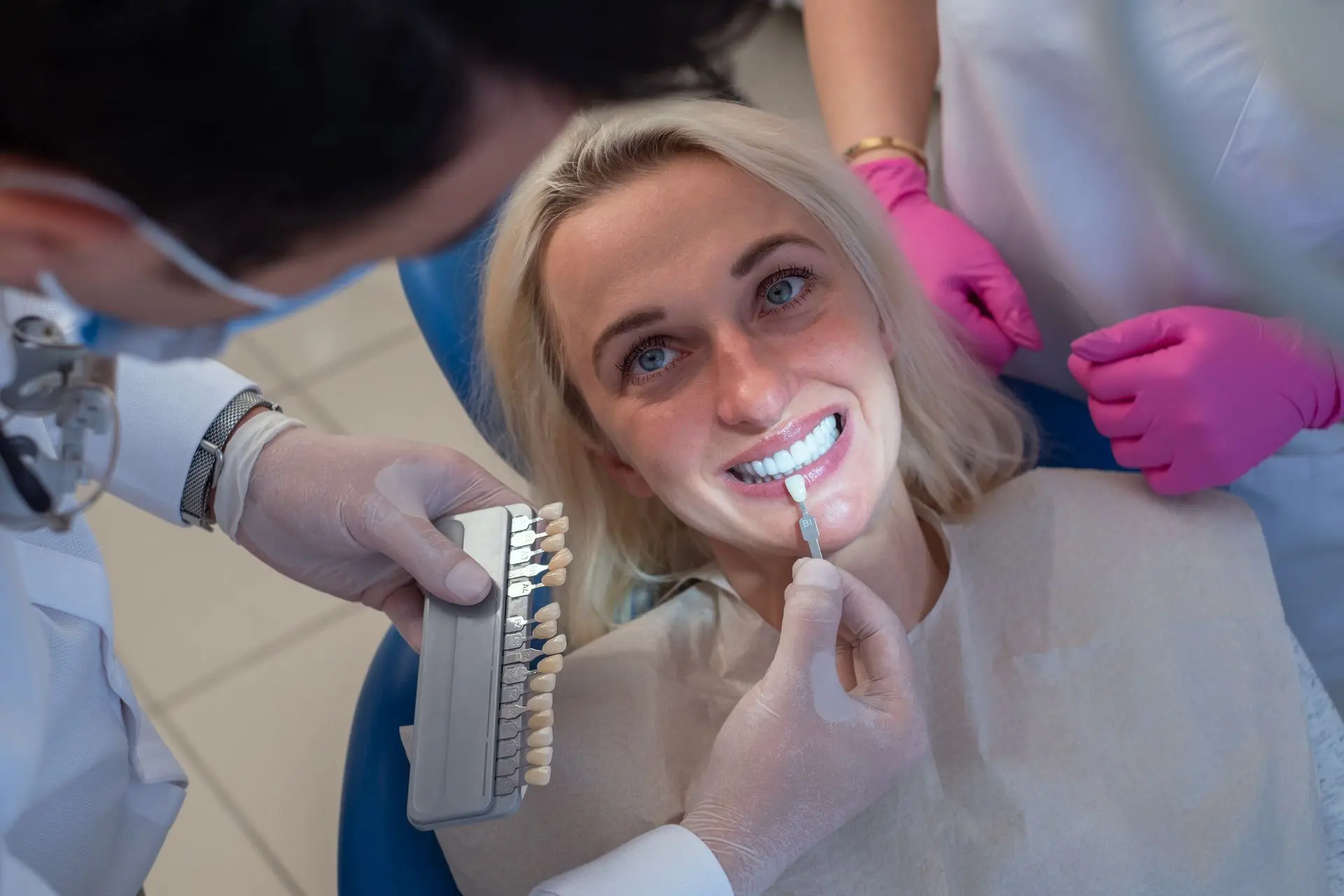
Dental Veneers: Pros and Cons of Porcelain and Composite Veneers
Comparing porcelain, composite, and Lumineer veneers — advantages, disadvantages, candidacy, and cost considerations.
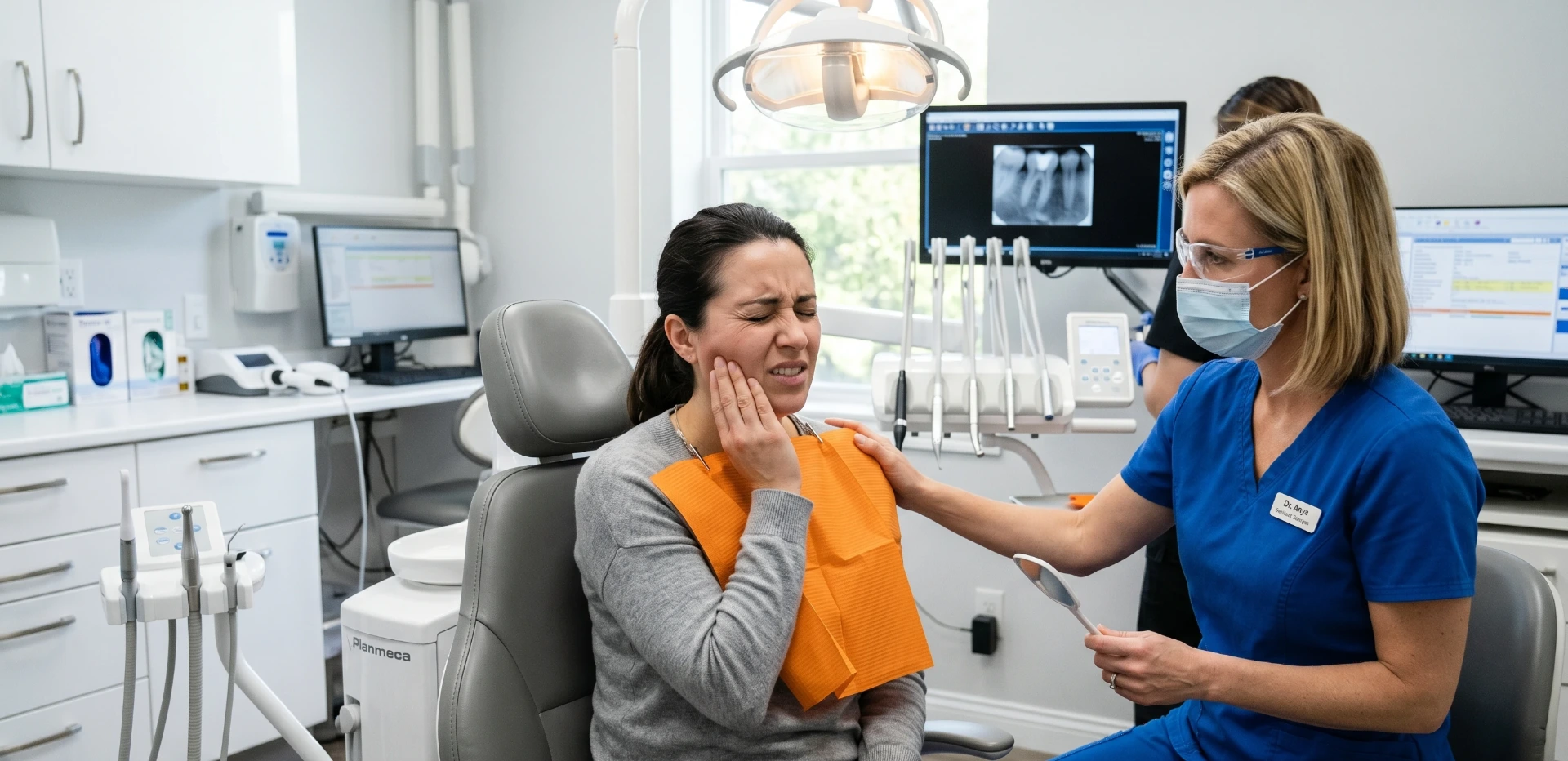
Wisdom Tooth Removal: When Is Wisdom Tooth Extraction Necessary?
Not every wisdom tooth needs to come out. Here is how dentists decide which third molars to remove and which to leave alone.