Upgrading a Removable Overdenture to a Fixed Implant Denture
Medically Reviewed by Dr. Reza A. Tafreshi, DDSClinical Board Verified
Fact-checked and approved for clinical accuracy in Orange County, CA.
Medically reviewed · 7 minute read
Most articles comparing denture options are written for someone who has not started treatment. This one is for the patient who already did: you have implants, you wear a removable overdenture that snaps onto them, and you have started wondering whether you could stop taking it out at night. That is a different question from choosing between All-on-4 and an overdenture in the first place, and it has a more encouraging answer than most people expect.
The two things that change
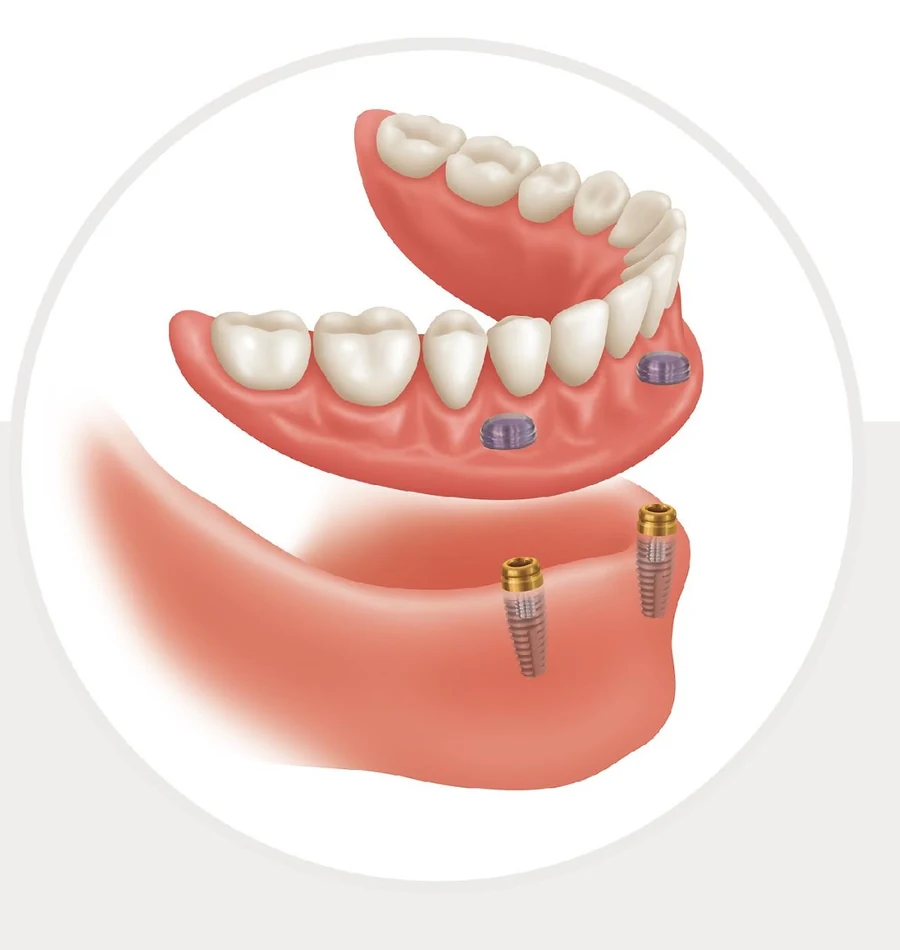
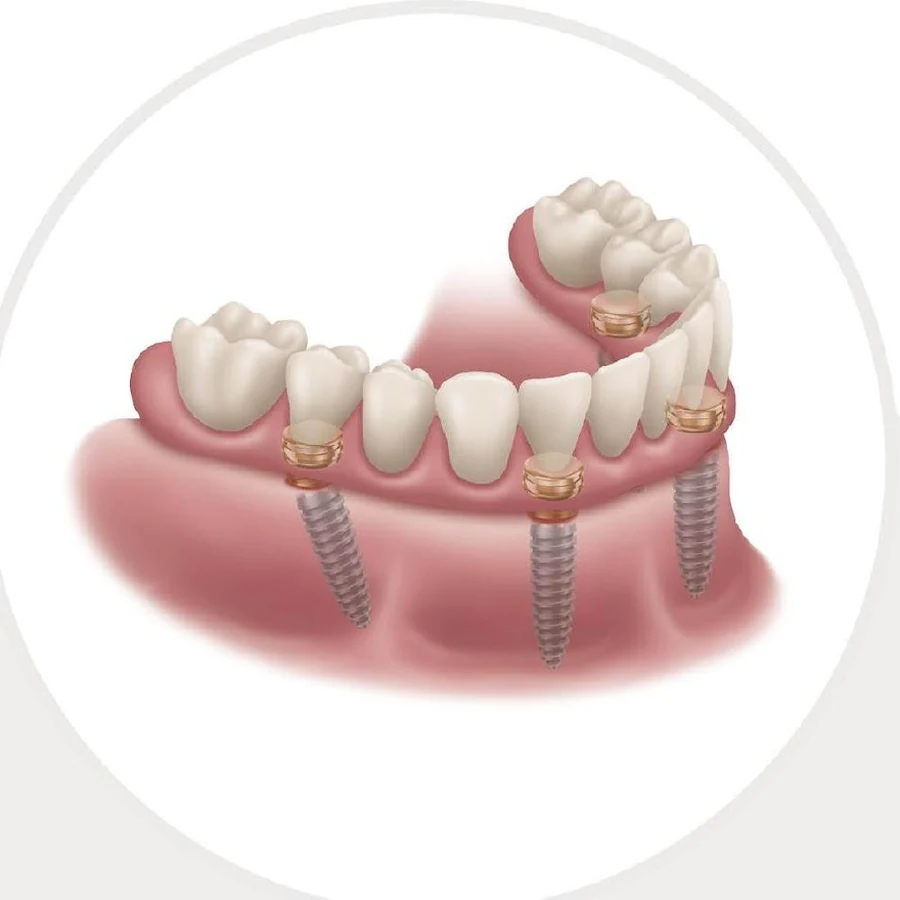
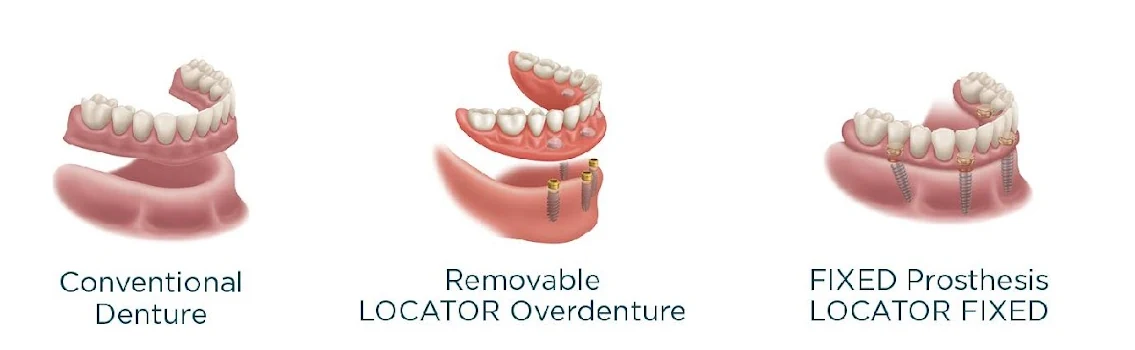
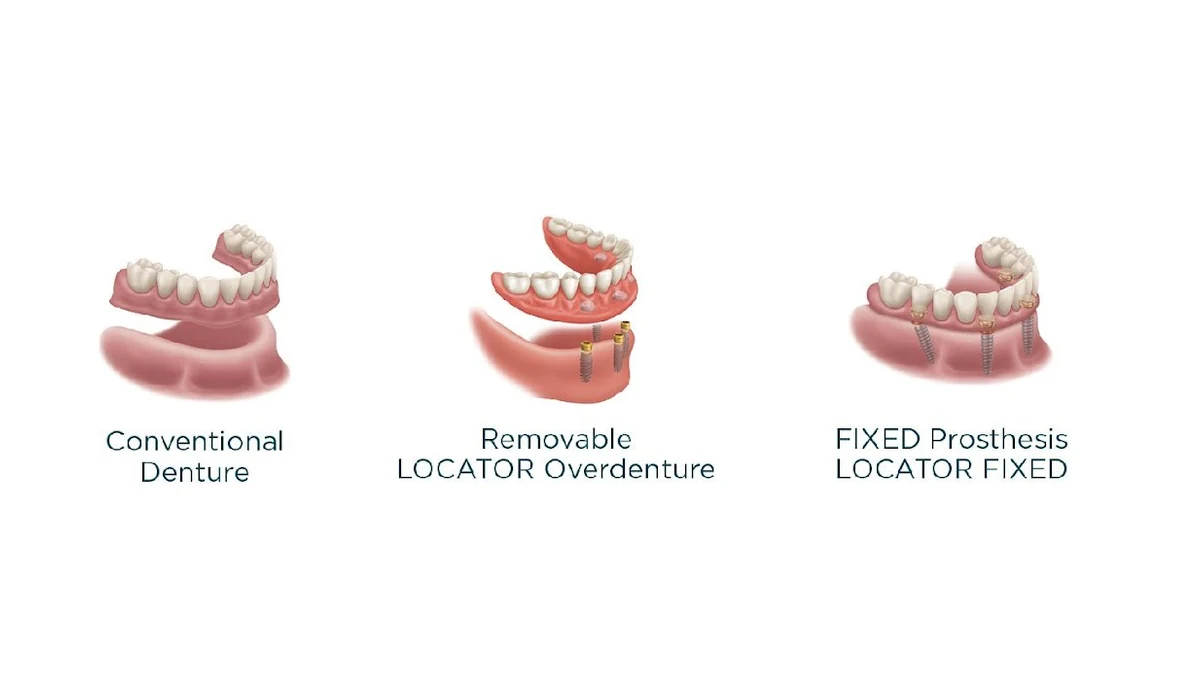
A removable overdenture is implant-retained. The implants hold it down; your gum ridge still carries much of the chewing load, and you take the prosthesis out to clean it and the attachments underneath. A fixed prosthesis is implant-supported. The implants carry the load, the prosthesis stays in, and only your dentist removes it — usually once a year at a recall visit.
Those two words get used interchangeably in casual conversation, and they should not be. Retained versus supported is the whole difference, and it decides how you clean, how much you can bite, and what the appointment schedule looks like for the rest of the prosthesis's life.
Why the upgrade is often simpler than people assume
Here is the part that surprises patients. A LOCATOR overdenture snaps onto abutments screwed into your implants. A fixed LOCATOR prosthesis seats on those same abutments. The hardware doing the work is shared between the two designs, which means the conversion can often be a prosthetic step rather than a surgical one.
In practice that means no new incisions, no new healing period, and no waiting months for fresh implants to integrate — for patients who already have at least four healthy, well-positioned implants in the arch. That qualifier is not fine print. It is the entire condition, and it is why the honest answer to "can I upgrade?" is always "let us scan it and find out" rather than "yes".
What we check before promising anything
| What we assess | Why it decides the answer |
|---|---|
| Number of implants in the arch | Four is the practical minimum for a fixed prosthesis. Two will hold a removable overdenture but not a fixed one. |
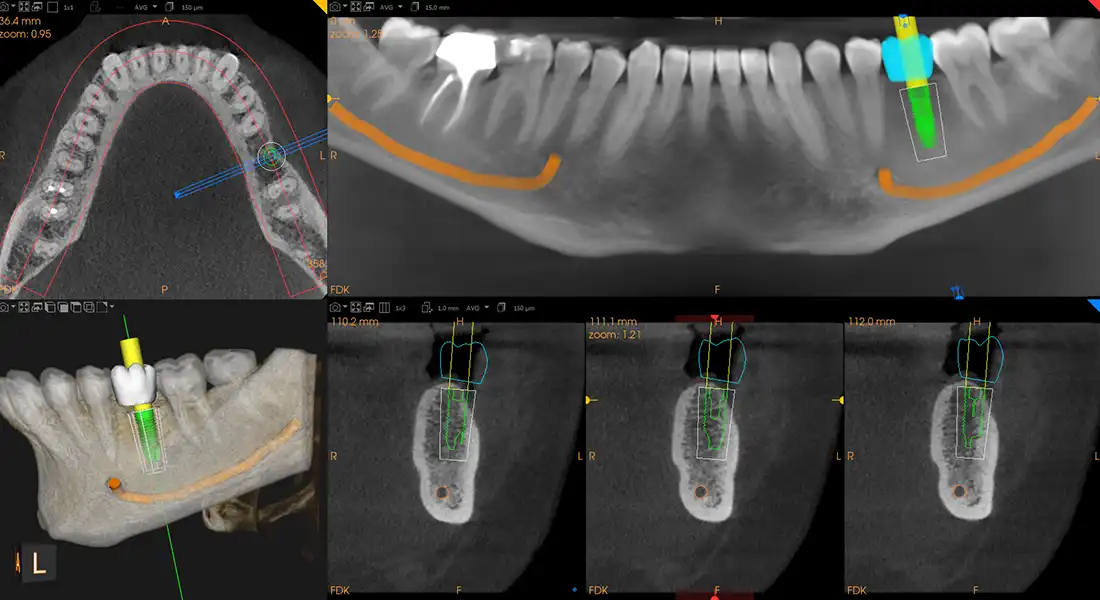
| Implant angulation | Implants placed for a snap-on denture are not always angled the way a fixed prosthesis needs. A 3D scan shows this; your memory of the surgery does not. |
| Restorative space | A fixed prosthesis needs vertical room between the ridge and the opposing teeth. Too little space and the design has to change. |
| Health of the implants | Bone loss around an implant (peri-implantitis) has to be treated before more load is put on it. |
| Condition of the abutments | Sound, correctly positioned LOCATOR abutments can often be reused. Replacing one is still far less involved than placing an implant. |
What if you have fewer than four implants?
A fixed conversion is usually still possible, but it means placing additional implants first — and that is a surgical step with its own healing time and its own cost. We will say that plainly rather than describing it as a simple upgrade, because the two paths are genuinely different experiences and you should be able to plan around the right one.
Many patients in this position decide the removable overdenture is serving them well and choose to keep it. That is a legitimate outcome of the consultation, not a failure of one.
What actually changes day to day
The upgrade is not only about convenience, and it is worth knowing what you are trading.
What gets better. You stop removing the prosthesis. Chewing force goes up because the implants carry it rather than your gums. There is no nightly cleaning ritual with the denture out, and no retention inserts wearing out every 12 to 18 months.
What gets harder. Cleaning becomes something you do around a prosthesis that does not come out, which takes more technique — a water flosser and interdental brushes do work that ordinary flossing cannot reach. Debris trapped under a fixed prosthesis is the main long-term risk, and it is the reason recall visits stop being optional.
How the appointment sequence usually runs
We start with a CBCT scan and a digital impression, which together answer the questions in the table above. If the arch qualifies, we design the prosthesis and mill it in our in-house dental lab, then seat and torque it. Because the lab is on site, shade and fit adjustments happen the same day rather than going back and forth with an outside laboratory.
If the arch does not qualify as-is, we plan the additional implants and give you the timeline before you commit to anything.
What it costs
There is no single figure, because the price depends on how many implants the arch already has, whether the existing abutments can be reused, whether grafting is needed, and which material the final prosthesis is made from. Reusing sound implants removes the largest surgical cost from the estimate entirely, which is why upgrading is generally less expensive than starting over with a fresh full-arch case. You get a written figure after the 3D scan, and we verify your insurance benefits before treatment. See insurance and financing options for how the balance can be spread.
Frequently asked questions
Will the fixed prosthesis look different from my overdenture? Usually yes, and generally better. A fixed design needs less bulk because it is not relying on a broad flange for stability, so it tends to feel less like an appliance.
Can I go back to removable afterward? This is one of the practical advantages of building on LOCATOR attachments — the same implants can carry either design, so the decision is less irreversible than it feels.
How long does the conversion take? When no new implants are needed, most patients are looking at a small number of visits rather than months. The scan and design come first; the seating appointment is short.
Does it hurt? If no surgery is involved, there is nothing to recover from. If implants have to be added, expect the same soreness-not-pain recovery as the original placement.
References
Take the next step
If you already wear a snap-on denture and want to know whether your implants can carry a fixed one, a 3D scan answers it in a single visit. Read more about LOCATOR implant dentures, or compare the alternative on our All-on-4 page, then book a consultation at AVF Dental Group in Aliso Viejo.
More from the Blog
 Implant-Supported Overdentures: The Complete Patient GuideSnap-On Dentures vs. All-on-4: Key Differences, Costs, and Options
 Dental Implants vs. Bridges: How to Replace a Missing Tooth
 All-on-4 vs. Overdentures: Choosing a Full-Arch Tooth Replacement
Have a question about your smile?
Bring this guide to a consultation in Aliso Viejo.
Book Your Visit Today
Same-day appointments and free consultations available. Our team is ready to help.
Patient education
Keep your smile moving forward
Read practical treatment guides and oral-health answers from the AVF Dental Group team.

Zirconia Crown: Advantages and Disadvantages of Zirconia Crown
Is zirconia better than porcelain? How long do zirconia crowns last? A complete look at the strongest dental crown material available today.
Dental Veneers: Pros and Cons of Porcelain and Composite Veneers
Comparing porcelain, composite, and Lumineer veneers — advantages, disadvantages, candidacy, and cost considerations.
Wisdom Tooth Removal: When Is Wisdom Tooth Extraction Necessary?
Not every wisdom tooth needs to come out. Here is how dentists decide which third molars to remove and which to leave alone.